The Enduring Power of Black and White Seamless Digital Paper
In a world saturated with complex gradients, vibrant color palettes, and intricate textures, there’s a foundational design asset that consistently proves its worth: black and white seamless digital paper. It’s more than just a background; it’s a versatile tool that provides structure, contrast, and timeless sophistication. For designers, entrepreneurs, and creators, understanding how to leverage this resource can elevate projects from good to genuinely professional.
More Than a Background: Defining the Asset
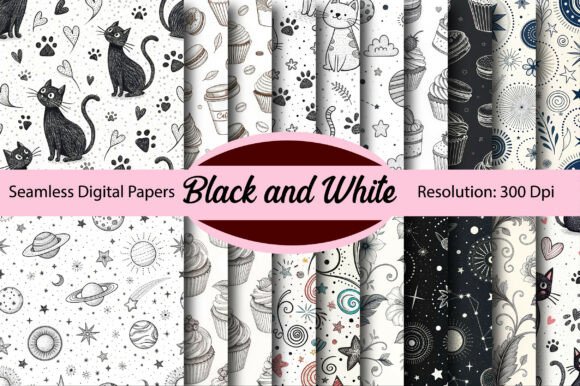
At its core, black and white seamless digital paper is a high-resolution, tileable pattern designed to repeat infinitely without visible seams or interruptions. This "seamless" quality is its superpower. Whether you're covering a small business card or an entire website background, the pattern flows continuously, creating a clean, polished look. Typically delivered as a 300 dpi JPEG or transparent PNG, it offers the crispness needed for both print and digital applications. The visual personality ranges from stark geometric grids and subtle linen textures to delicate florals and bold stripes. This variety means it can be minimalist and modern, or classic and ornate, all while maintaining a cohesive monochromatic scheme.
The appeal lies in its neutrality and strength. Black and white doesn't compete with your foreground content—it supports it. It establishes a clear visual hierarchy, ensuring that text, logos, and key imagery stand out with maximum clarity. For a brand, using a consistent pattern from a black and white seamless digital paper collection can become a subtle part of its identity, adding a layer of texture and recognition across all touchpoints.
Practical Applications Across Creative Fields
The utility of this design asset spans nearly every creative discipline. For logo design and brand identity, a textured background can add depth to presentations or mockups, helping clients visualize the logo in context. In packaging design, a subtle pattern can differentiate product lines while maintaining a cohesive brand feel. Imagine a luxury skincare line using a fine linen texture, or a tech startup opting for a clean geometric grid—both achieved with a single, versatile asset.
In the digital realm, it's invaluable for web design and social media graphics. A seamless pattern can break up large blocks of solid color, add visual interest to landing pages, or create eye-catching templates for Instagram stories and Pinterest pins. For editorial design, it can serve as a sophisticated background for magazine layouts, blog headers, or ebook covers, providing a consistent frame for varying content. Crafters and scrapbookers find endless uses for it as a foundational layer in digital and physical projects, from card making to party decorations.
Here are just a few project types where a black and white seamless digital paper proves indispensable:
- Print Materials: Business cards, letterheads, brochures, and wedding invitations.
- Digital Assets: Website backgrounds, email headers, presentation slides, and digital planners.
- Product & Packaging: Product labels, shopping bags, tissue paper, and box inserts.
- Creative & Craft: Scrapbooking backgrounds, papercraft, fabric pattern inspiration, and art prints.
- Marketing & Branding: Social media templates, ad banners, brand style guides, and trade show materials.
Integrating Pattern into Your Design Workflow
Choosing the right pattern involves more than just picking one you like. First, consider the project's tone. A delicate polka dot might suit a playful bakery brand, while a sharp herringbone could be perfect for an architecture firm. Always test the pattern at the intended scale. A design that looks great on your screen might become too busy or too faint when printed on a large poster or viewed on a mobile device.
Think about font pairing and overall readability. A complex, high-contrast pattern demands a clean, sans serif font for body text to maintain legibility. Conversely, a very subtle texture can pair well with a more expressive serif font or even a script font for headlines. The goal is balance. Your background pattern should enhance, not overwhelm, your primary content.
Finally, verify the licensing. Most reputable sources for premium design assets offer clear commercial licenses, allowing you to use the patterns in client work and products for sale. This is a critical step for small business owners and content creators who need to ensure their projects are legally sound. By treating black and white seamless digital paper as a strategic component of your toolkit—not just a decorative afterthought—you unlock a powerful way to add professionalism, consistency, and visual depth to everything you create.