Lavender Flowers Butterfly Backgrounds: A Designer’s Versatile Asset
When you’re working on a project that needs a touch of natural elegance, finding the right design asset can feel like searching for a needle in a haystack. You want something beautiful, but also functional—something that sets a mood without overwhelming your main content. This is where thoughtfully crafted watercolor backgrounds, like this collection of lavender flowers and butterflies, become indispensable tools in your creative arsenal.
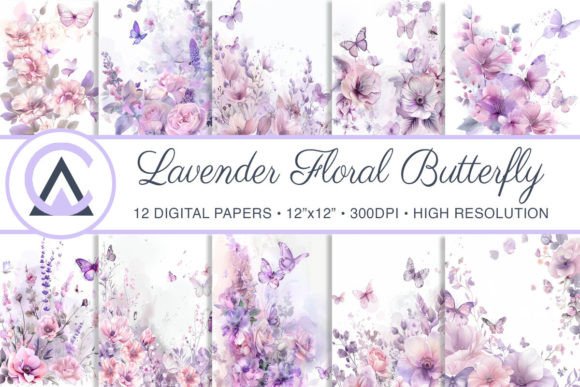
Visually, this set of twelve digital papers strikes a delicate balance. The watercolor style gives each background an organic, hand-painted feel that’s both artistic and approachable. Soft purples, greens, and hints of other floral tones blend together, creating a serene and slightly whimsical personality. The butterflies aren’t just static elements; they’re integrated into the composition, adding a sense of movement and life. This isn’t a loud, busy pattern. It’s a sophisticated, calming texture that provides depth and character while maintaining a clean aesthetic. It’s the kind of background that feels premium and intentional, suitable for both personal keepsakes and professional branding.
Where These Digital Papers Truly Shine
The real value of a versatile asset like this is its range of application. For brand identity and logo design, a subtle texture from this collection could be used as a background for a logo mockup, a website hero image, or a social media profile banner, instantly conveying a brand personality that is nurturing, artistic, or connected to nature. Think of a boutique florist, a wellness coach, a children’s book author, or an artisanal soap maker—this background speaks their visual language without a word.
In editorial design and publishing, these backgrounds are perfect for creating eye-catching book covers, especially in genres like romance, women’s fiction, or nature poetry. They can serve as beautiful endpapers for a printed journal or as the foundational layer for a magazine feature layout. For packaging design, imagine a lavender-themed candle label, a set of botanical notecards, or a gift box wrap. The high-resolution, 300 DPI files ensure that the watercolor details remain crisp and beautiful, even when printed on physical products like mugs, t-shirts, and stickers.
Digital creators will find them equally useful. Use one as a textured background for a quote graphic on Instagram, a webinar slide deck, or a Pinterest pin that needs to stand out. The 12x12 inch square format is ideal for scrapbooking—both digital and hybrid—allowing you to print them out for junk journals, handmade cards, or collage projects. The ability to easily resize and edit the files in common software means you can adapt them to any dimension, from a website banner to a small favicon.
Practical Guidance for Seamless Integration
Choosing to use a decorative background is a strategic decision. Before applying one of these lavender papers, consider the hierarchy of your design. These backgrounds work best when they support your main content—your headline, your logo, your product photo—not compete with it. You might use a full bleed for a book cover where the title is rendered in a strong, contrasting sans serif font or an elegant script font. For a website, you might use a softer, faded version of the pattern as a subtle texture behind a content block.
Testing is key. Overlay your text and graphics on a sample of the background to evaluate readability. The soft watercolor style generally provides good contrast for dark or light text, but it’s always wise to check. If the background feels too busy for your primary message, consider using it as a border, a header graphic, or a section divider within a larger layout.
When it comes to font pairing, let the background’s style guide you. Its organic, handwritten quality pairs beautifully with clean, modern typefaces for a balanced look. A geometric sans serif font can provide a contemporary counterpoint, while a classic serif font can enhance the timeless, elegant feel. For a more thematic approach, a delicate handwritten font or script font could be used for accents, though readability should remain the priority for body copy.
Remember to review the commercial licensing terms if you plan to use these backgrounds for client work or products for sale. Understanding what’s included—like the different file formats (PNG and JPEG)—ensures you can integrate them smoothly into your workflow, whether you’re designing in Adobe Photoshop, Illustrator, Canva, or Procreate.
Ultimately, this collection of watercolor butterfly lavender flower backgrounds is more than just pretty paper. It’s a practical design asset that can help establish mood, add texture, and elevate the professionalism of a wide array of projects. By thinking strategically about placement, contrast, and complementary typography, you can harness its serene beauty to create something truly engaging for your audience.