Unleash Your Wild Side: A Designer's Guide to Animal Print Digital Papers
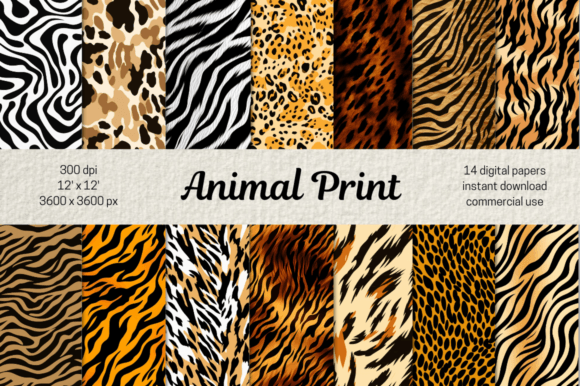
There’s a reason animal prints never go out of style. From the runway to interior design, these patterns carry an inherent energy—bold, confident, and unmistakably alive. For digital creators and crafters, capturing that same visceral appeal can be a challenge. Generic, low-resolution patterns often fall flat, looking more like a cheap costume than a sophisticated design choice. The Animal Print Pattern Digital Papers Set is a curated collection designed to solve that problem, offering high-quality, versatile backgrounds that bring genuine untamed elegance to your work.
Beyond the Basic Spot: Understanding Visual Personality
At its core, this bundle isn't just a random assortment of animal skins. It’s a study in texture, contrast, and mood. Think of it as a premium font family, but for backgrounds. Just as a serif font conveys tradition and authority, a classic leopard spot pattern communicates a different kind of personality—perhaps edgy, luxurious, or adventurous. The Animal Print Pattern Digital Papers Set provides this range. You’ll find everything from the high-contrast, graphic nature of zebra stripes, which can act almost like a bold display font for your layout, to more subtle, tonal interpretations that resemble a textured sans serif font—versatile and supporting without overwhelming.
The true strength lies in its ability to influence brand perception and audience engagement. A carefully chosen animal print can instantly position a brand or project. For a fashion blogger, it’s a direct line to current trends. For a boutique marketing agency, it might signal creativity and a willingness to break the mold. For a scrapbooker, it adds a layer of dynamic energy to memories. The key is matching the pattern’s intensity to your project’s voice. A loud, high-saturation print works for a call-to-action banner, much like a heavy handwritten font. A desaturated, almost watercolor-like leopard print could serve as a subtle, textured background for elegant wedding invitations, complementing a delicate script font.
Practical Applications: From Screen to Print and Beyond
The versatility of this digital paper bundle is where its real-world value shines. As a designer or content creator, you’re constantly sourcing design assets that can work across multiple platforms. Here’s how to leverage these patterns effectively:
- Digital Design & Social Media Graphics: Use a zebra stripe paper as a bold background for an Instagram Story or a Facebook ad. It stops the scroll instantly. Pair it with a clean, modern typeface for your text to ensure readability. The pattern does the heavy lifting for visual impact, allowing your message to stand out in a structured way.
- Branding & Packaging Design: Incorporating an animal print into a brand identity requires nuance. It’s rarely used for the primary logo, but it’s exceptionally powerful as a secondary element. Imagine a cosmetics brand using a sophisticated giraffe or snakeskin pattern on product packaging, tissue paper, or a shopping bag. It adds a tactile, luxurious feel that communicates quality and style, much like choosing a high-end serif font for your wordmark.
- Print Projects & Crafts: For scrapbooking, junk journaling, and paper crafts, these digital papers are a game-changer. They provide a professional, cohesive backdrop for photos and embellishments. Because they are digital, you can scale, print, and use them on demand. The set’s variety means you can create a themed album—like a safari trip or a bold fashion portfolio—with consistent yet diverse visuals.
- Sublimation & Product Design: The high-resolution quality makes these patterns ideal for sublimation projects. Think custom phone cases, mugs, tote bags, or even fabric for small-batch fashion items. The seamless repeat of a well-designed pattern is crucial here, and a quality set ensures no awkward seams or misalignments, maintaining the professionalism of your final product.
Making the Pattern Work: A Strategic Approach
Simply dropping an animal print into your design isn’t enough. To use it effectively, you need to treat it with the same strategic thinking you’d apply to choosing a font pairing.
Evaluating Fit and Testing
Before you commit, ask: Does this pattern’s energy align with my project’s goal? A playful, cartoonish leopard print might be perfect for a children’s party invitation but disastrous for a corporate report. Always test the pattern in context. Place your logo, text, and key imagery on top of the digital paper. Does it compete with or complement your content? Use the pattern’s scale and color to guide the viewer’s eye.
The Critical Role of Readability and Hierarchy
This is non-negotiable. An animal print is visually complex. Placing text directly on top of a busy pattern can kill readability. The solution is to use design principles to create hierarchy. Add a semi-transparent overlay (a solid color or a gradient) between the pattern and your text. Alternatively, use the pattern in contained areas—like a header bar, a sidebar, or a photo frame—while keeping text areas clean. This approach mirrors how we use a creative font: it grabs attention in a headline, while a simpler body font carries the detailed information.
Licensing and Commercial Use
For designers, entrepreneurs, and small business owners, the commercial license is a critical component. A reputable digital paper bundle will include a clear license that allows for use in projects you sell, whether it’s a printed invitation suite, a digital planner, or a physical product. Always review the terms. Knowing you have the legal right to use the asset commercially protects your business and allows you to price your work appropriately, factoring in the cost of these design assets.
In the end, the Animal Print Pattern Digital Papers Set is more than just decorative backgrounds. It’s a toolkit for injecting personality, texture, and a sense of daring into your creative work. Used with intention, it can elevate a project from ordinary to unforgettable, helping you build a brand or create a piece that truly resonates with its audience. The wild side of design is waiting; it’s all about how you choose to tame it.