Timeless Texture: Integrating Old Newspapers Digital Paper into Modern Design
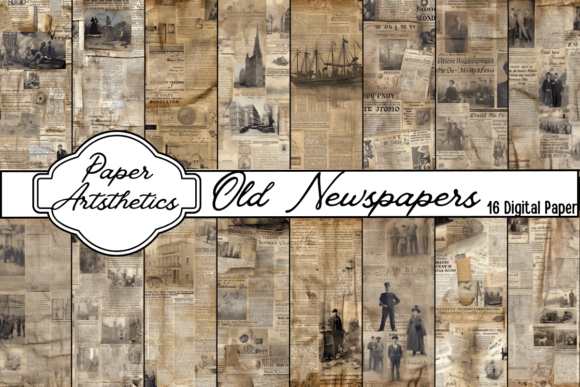
In the realm of digital design, finding assets that offer genuine texture and historical weight can be a challenge. We often rely on flat colors or generic gradients, but sometimes a project demands a layer of nostalgia and tactile realism. The Old Newspapers Digital Paper collection addresses this specific need, offering a unique Vintage Newspaper Digital Paper Pack that bridges the gap between digital precision and analog charm. This isn't just about slapping a background onto a screen; it is about curating a mood. With 16 distinct coffee-brown newspaper designs available in high-resolution PNG and JPG formats, this pack serves as a versatile toolkit for creatives looking to add depth to their work.
The Aesthetic of Age: Understanding the Visual Language
The core appeal of this specific Old Newspapers Digital Paper lies in its subtle imperfections. When you look at these files, you aren't seeing a sterile, repeating pattern. Instead, you are met with the rich, sepia-toned warmth of aged newsprint. The "coffee brown" palette is particularly effective because it avoids the stark, clinical white of modern digital interfaces, replacing it with something organic and lived-in. The visual characteristics suggest a history—a story behind the texture. The typography within the paper fragments often mimics classic serif font styles, which inherently brings a sense of tradition and authority to the design. This style is less about modern minimalism and more about "Paper Art-sthetics," embracing the grain, the slight fading, and the columnar structure of traditional editorial design.
For designers, this texture provides an immediate context. It grounds the viewer, suggesting that the content is tangible and curated. Whether you are working on a brand identity for a heritage brand or creating social media graphics for a coffee shop, the personality of this paper evokes a slower, more deliberate pace of life. It is a visual shorthand for authenticity.
Strategic Applications: From Junk Journals to Brand Strategy
The versatility of the Old Newspapers Digital Paper extends far beyond simple scrapbooking. While it is perfectly suited for personal crafts like junk journals and planners, its utility in professional commercial projects is significant. In packaging design, for instance, a coffee-brown newsprint background can communicate an artisanal, small-batch quality. It tells the consumer that the product inside is crafted with care, perhaps using traditional methods.
For content creators and marketers, these backgrounds offer a way to break the monotony of the digital feed. On platforms like Instagram or Pinterest, where visual noise is high, a textured background can stop the scroll. It adds a layer of sophistication to quote cards, promotional announcements, or blog headers. When used in web design, these papers can serve as a background for "About Us" sections or hero images where the narrative is central. The texture supports the text without overwhelming it, provided the layout respects the visual hierarchy.
Furthermore, the pack’s structure—16 PNG and 16 JPG files at 12x12 inches and 300 DPI—ensures that the files are production-ready. The high resolution is crucial for print applications. Whether you are printing physical stationery, logo design mockups, or large-format posters, the 3600x3600px dimension ensures that the grain remains crisp, not pixelated. This is a premium font and asset requirement that separates amateur work from professional output.
Design Mechanics: Typography, Pairing, and Readability
Integrating a complex background like the Old Newspapers Digital Paper requires a thoughtful approach to typography. Because the background itself contains visual noise (text and grain), the foreground typography must command attention through contrast and simplicity. This is where font pairing becomes critical.
A common mistake is pairing a textured background with a highly decorative script font or a busy handwritten font. The result is often illegible. Instead, consider the principles of modern typography. Use a clean, bold sans serif font for headlines. The geometric simplicity of sans-serif letters provides a stark, modern contrast to the organic, vintage chaos of the newspaper texture. This juxtaposition creates a dynamic visual hierarchy, guiding the viewer's eye immediately to the message.
For body text, readability is paramount. If you are overlaying text directly on the paper, ensure there is sufficient opacity or a subtle drop shadow to lift the letters off the page. However, a more professional approach often involves using the Old Newspapers Digital Paper as a background element within a layout, rather than a direct backdrop for paragraphs of text. Use it in sidebars, borders, or cut-out shapes to maintain the brand perception of vintage quality without sacrificing the clarity of your message.
Practical Integration and Commercial Licensing
When incorporating these design assets into a workflow, it is helpful to treat them as a creative font or a core element of the visual system. For entrepreneurs and small business owners, consistency is key. If you choose to use this vintage aesthetic, it should be reflected across multiple touchpoints—your website, your email headers, and your physical packaging—to build brand recognition.
Before finalizing a design, always test the font pairing against the specific paper texture you select from the pack. The coffee-brown tone has a distinct temperature; cooler, blue-toned grays might clash, while warm earth tones or crisp whites will harmonize. Evaluate the "busyness" of the specific newspaper clipping in the background. Some pieces may have larger headlines that can be used creatively as part of the design, while others might be denser text blocks better used as subtle texture.
Finally, regarding usage rights: while this pack is offered for download, always verify the specific licensing terms for commercial use. Most premium font and asset providers allow for broad commercial application, but it is the mark of a responsible designer or publisher to ensure that the assets are cleared for your specific intended use, be it digital merchandise, print-on-demand, or client work. By respecting the asset and understanding its strengths, you can transform a simple digital paper into a powerful storytelling tool.